








In an era where urban safety and proactive crime prevention are top global priorities, Dubai stands out as a leading example of how cutting-edge surveillance technologies are being integrated into public infrastructure to create safer, smarter cities. With rapid urbanization, increasing population density, and continuous development of critical infrastructure, Dubai is leveraging advanced monitoring systems to ensure security, improve emergency responses, and enhance the quality of life for its residents and visitors.
TLDR:
All Heading
Dubai has adopted advanced surveillance technologies to improve citywide safety and public security. Using smart cameras, facial recognition systems, AI-driven analytics, and real-time data sharing, authorities can detect threats proactively and respond more rapidly. These solutions reduce crime, enhance traffic management, and support public events, positioning Dubai as a global leader in smart and safe urban living.
Dubai’s Vision for a Smart and Secure City
Dubai’s smart city initiative is rooted in the government’s Dubai 2040 Urban Master Plan, aimed at creating a sustainable, efficient, and secure urban environment. The city has invested in a vast network of intelligent monitoring systems that blend artificial intelligence, high-resolution imaging, and real-time data collection to help monitor activities across various public sectors.
Under the Smart Dubai and Dubai Police initiatives, surveillance technology plays a pivotal role in ensuring:
- Reduction in crime rates through real-time threat detection
- Traffic control and accident prevention via smart traffic cameras
- Public safety management during events and high-density gatherings
- Rapid emergency response by enabling coordination between multiple agencies
AI and Facial Recognition: The Heart of Dubai’s Surveillance Suite
One of the most transformative elements in Dubai’s surveillance push is the use of AI-powered facial recognition systems. These systems are embedded within public spaces such as airports, shopping centers, metro stations, and government buildings. The integration of machine learning and biometric data enables law enforcement to identify and track individuals of interest in real-time, helping to deter crime before it takes place.
Facial recognition is used not just for detecting wanted individuals, but also in:
- Verifying identity for secure access to buildings or restricted zones
- Supporting the immigration and customs process at Dubai International Airport
- Overseeing public movement during major events and gatherings

Privacy concerns are addressed through strict data governance policies and encrypted data storage, ensuring responsible use and protection of citizens’ rights. The emphasis remains on using surveillance to augment safety without undermining personal freedoms.
Smart Cameras and Real-Time Video Analytics
Dubai’s streets, highways, and commercial centers are equipped with thousands of high-definition smart CCTV cameras that are capable of more than just video recording. With embedded AI and deep learning tools, these cameras can detect anomalies, suspicious behavior, and unsafe conditions without human intervention.
Some standout surveillance features include:
- Automatic number plate recognition (ANPR) to catch traffic violators or stolen vehicles
- Traffic pattern analysis to dynamically adjust signals and reduce congestion
- Behavioral analysis to monitor activities like loitering or unauthorized access in sensitive zones
Video analytics feed directly into Dubai Police’s control centers, offering real-time dashboards and alerts. For critical infrastructure like ports, metro lines, and power stations, this constant monitoring is crucial to preventing intentional or accidental disruptions.
Success Stories Backed by Technology
Dubai Police reports a significant reduction in crime rates — especially burglaries and theft — since the integration of AI-powered surveillance. In 2023, Dubai recorded a 12% decline in serious crime offenses, supported in part by predictive policing models that analyze behavioral and historical data to forecast potential incidents.
One notable success involved the rapid identification and arrest of a suspect involved in a hit-and-run incident within hours, thanks to ANPR and city-wide video footage. Similar technologies have also helped locate missing persons and manage crowd safety during international events like Expo 2020 and the Dubai Marathon.
Safer Streets Through Smart Traffic Surveillance
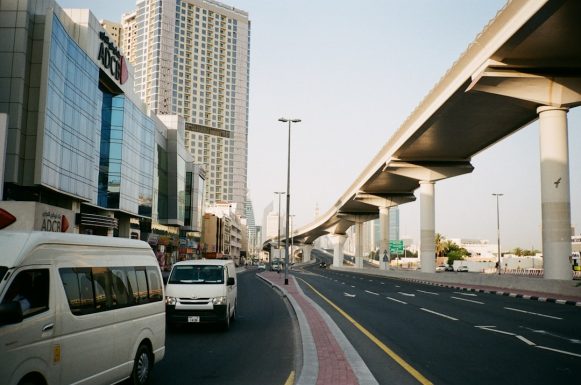
Dubai faces the familiar challenge of heavy traffic and pedestrian congestion — particularly during peak tourist seasons. Smart traffic surveillance plays a key role in enforcing road safety and mitigating risks on the roads.
High-tech cameras installed on traffic lights, flyovers, and even drones enable:
- Incident Management: Instant alerts regarding accidents or stalled vehicles with GPS-linked dispatch to emergency teams.
- Speed Monitoring: Enforcement of speed limits using radar-enabled smart poles.
- Pedestrian Safety: Smart crosswalks and surveillance cameras help protect vulnerable road users in crowded areas.
The Roads and Transport Authority (RTA) integrates this system with AI-powered traffic flow analysis, allowing dynamic rerouting suggestions and reducing commute times.
Integration with Emergency Services
One of the key strengths of Dubai’s surveillance infrastructure is its seamless integration with emergency services. A unified digital platform connects police, ambulance services, fire departments, and civil defense units, allowing faster synchronization and coordinated response.
With AI-generated alerts and live video sharing, responders can:
- Assess real-time situations before arriving on scene
- Deploy appropriate resources based on data
- Track movement of emergency vehicles to reduce delays
For example, during building fires or industrial accidents, surveillance footage from inside and around the structure is shared with rescue teams, helping to locate trapped individuals and identify hazards in advance.
Public Engagement and Trust
No surveillance technology can be effective without public trust and compliance. Dubai has made considerable efforts to be transparent about its smart safety initiatives by launching public awareness campaigns and digital governance portals.
Citizens can report incidents using smart apps, access information on incident updates, and even request footage under certain legal frameworks. This participatory approach fosters a sense of mutual responsibility and illustrates that surveillance is there to protect — not to intrude.
Challenges and Ethical Considerations
Despite its many advantages, the implementation of extensive surveillance comes with challenges. Data privacy, potential misuse, and over-reliance on technology are concerns that Dubai addresses through:
- Strict cybersecurity protocols to protect citizen data
- Independent oversight committees that periodically review surveillance systems
- World-class encryption standards for information stored and transmitted via surveillance systems
In balancing safety with liberty, Dubai’s model evolves under international norms and ethical standards to ensure transparency, legal compliance, and respect for human rights.
The Road Ahead: Smart Surveillance in the Future
As technology evolves, so will Dubai’s approach to public safety. Future plans include the deployment of:
- AI-driven facial expression recognition to detect anxiety, fear, or aggression in public places
- Autonomous surveillance drones for large geographical coverage and real-time assessments
- Blockchain technology to log and audit surveillance activity securely
Dubai also plans to collaborate with global smart city hubs to share strategies and co-develop standards that other cities can replicate.
Conclusion
Dubai’s commitment to embracing advanced surveillance technology is yielding tangible results in terms of reduced crime, enhanced emergency responses, and improved urban management. By intelligently combining AI, biometric data, real-time monitoring, and a strong legal framework, Dubai sets a global example of how smart cities can be not only highly efficient but also exceptionally safe.
While concerns about privacy remain valid and must continue to be addressed, the overarching narrative is clear: Technology, when deployed transparently and ethically, can be a powerful ally in building safer urban futures.






Recent Comments