






Few names are as iconic in the world of food and business as McDonald’s. With its golden arches recognized across the globe, McDonald’s has played a colossal role in shaping fast food culture and global dining habits. But how did it come to be the multinational giant it is today, and when exactly was McDonald’s founded?
TL;DR
All Heading
McDonald’s was originally founded in 1940 by brothers Richard and Maurice McDonald in San Bernardino, California. What started as a single drive-in restaurant transformed when Ray Kroc joined the business in 1954 and opened the first official McDonald’s franchise in 1955. From there, the brand grew into the global franchise empire we know today. The success of McDonald’s rests on a foundation of innovation, operational efficiency, and a consistent product worldwide.
Early Beginnings: The First McDonald’s Restaurant (1940)
McDonald’s began in humble surroundings. In 1940, brothers Richard “Dick” and Maurice “Mac” McDonald opened a barbecue drive-in restaurant in San Bernardino, California. Initially called “McDonald’s Bar-B-Q,” the restaurant had over 25 items on the menu and employed carhops to serve meals to customers in their cars.
The McDonald brothers were quick to notice a trend: the majority of their revenue came from just a few popular items – hamburgers, fries, and soft drinks. In 1948, they made a bold move. They shut down operations for several months and reworked their business model around a streamlined, efficient service style they coined the “Speedee Service System“. This model emphasized:
- A simplified menu
- Self-service counter
- Quick food preparation
- Disposable packaging
This revolutionary approach cut waiting times and reduced costs, laying the groundwork for the fast-food model we know today.
Enter Ray Kroc: The Franchise Visionary (1954-1955)
If the McDonald brothers laid the foundation, it was Ray Kroc who built the empire. A Multimixer milkshake machine salesman, Kroc was intrigued by the McDonalds’ need for eight mixers—an unusually high number for a single restaurant. Wanting to see for himself, he visited the San Bernardino location in 1954 and was blown away by the efficiency and innovation he witnessed.
Kroc immediately recognized the potential to replicate this model across the U.S. and beyond. He proposed franchising the restaurant, positioning himself as the leader for this endeavor. In 1955, he opened the first McDonald’s franchise in Des Plaines, Illinois, and established the McDonald’s Corporation.
That location is widely recognized as the birthplace of the modern McDonald’s, even though it wasn’t the original McDonald brother’s restaurant.
Image not found in postmetaTensions Between Kroc and the McDonald Brothers
While Kroc was busy expanding the brand, tensions grew between him and the founding brothers. The McDonalds were more conservative, satisfied with their local restaurant’s success, while Kroc imagined a nationwide chain. In 1961, after several disagreements, Kroc bought exclusive rights to the McDonald’s name and the business itself for $2.7 million.
This purchase gave Kroc full control of the company and its future, and he wasted no time in transforming it into a franchise powerhouse.
Expansion and Global Growth
From the 1960s onwards, McDonald’s grew rapidly. Under Kroc’s leadership, the company focused on uniform performance, quality, and cleanliness, ensuring that the experience in Los Angeles matched that in New York—or eventually Tokyo, London, and Sydney.
Here are some key milestones in McDonald’s history:
- 1965: McDonald’s goes public and is listed on the stock exchange.
- 1967: The first international McDonald’s opens in Canada and Puerto Rico.
- 1971: McDonald’s opens in the Netherlands, Germany, and Japan.
- 1984: Ray Kroc dies, leaving behind more than 7,500 stores worldwide.
- 1990: McDonald’s opens its first restaurant in Russia during the Soviet Union’s final days—a major symbolic moment.
- 2021: Over 39,000 locations in over 100 countries.
Branding and Innovation
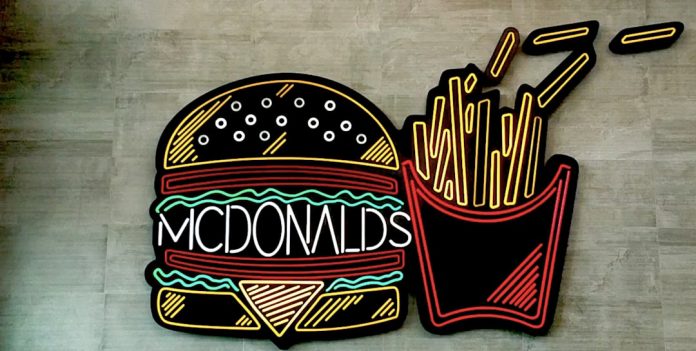
One of McDonald’s strongest suits has been its marketing and branding. The iconic Golden Arches logo was introduced in the 1960s and became one of the most recognized symbols worldwide. Comical characters such as Ronald McDonald, the Hamburglar, and Grimace helped align the brand with children and families.
Moreover, innovation didn’t stop in the kitchen. McDonald’s introduced:
- Drive-thru windows in the 1970s
- Value meals in the 1980s
- Digital ordering kiosks and app-based delivery in the 2010s
The company has also taken steps to offer more health-conscious items and improve sustainability in packaging and sourcing, responding to changing consumer demands.
Cultural and Economic Impact
McDonald’s is more than just a restaurant chain—it’s a symbol of globalization. The term “McDonaldization” even emerged in sociology to describe the process by which principles of the fast food industry—efficiency, predictability, and control—dominate other sectors of society.
Despite criticism for its labor practices, environmental impact, and nutritional content, McDonald’s influence is undeniable. It employs millions worldwide and is often the first job for teenagers in many countries. The consistent quality and affordability make it a popular dining choice across income brackets.
Image not found in postmetaModern-Day McDonald’s
Today, McDonald’s operates in more than 100 countries, serving nearly 70 million customers daily. Its current headquarters are in Chicago, Illinois, after relocating from Oak Brook in 2018. The company continues to evolve, introducing digital tools like mobile ordering, app-based loyalty programs, and sustainability initiatives such as eco-friendly packaging and plant-based menu items.
To adapt to local markets, McDonald’s customizes its menu. In India, you’ll find the McAloo Tikki and in Japan, items like shrimp burgers regularly appear. This approach allows it to maintain a global presence while respecting local tastes and cultures.
Conclusion: A Global Giant with Humble Roots
So, when was McDonald’s founded? The journey began back in 1940, with two brothers in California trying to create a more efficient way to serve food. But it was Ray Kroc’s vision and business acumen that transformed the operation into a global dominator in the fast food industry.
From its humble origins to a brand that touches nearly every part of the globe, McDonald’s story is one of innovation, adaptability, and vision. Whether you love it or criticize it, there’s no denying its status as a cultural and economic icon.
Next time you grab a Big Mac or a Happy Meal, remember: you’re taking part in a story that stretches back over eight decades.






Recent Comments